

Surender Kumar
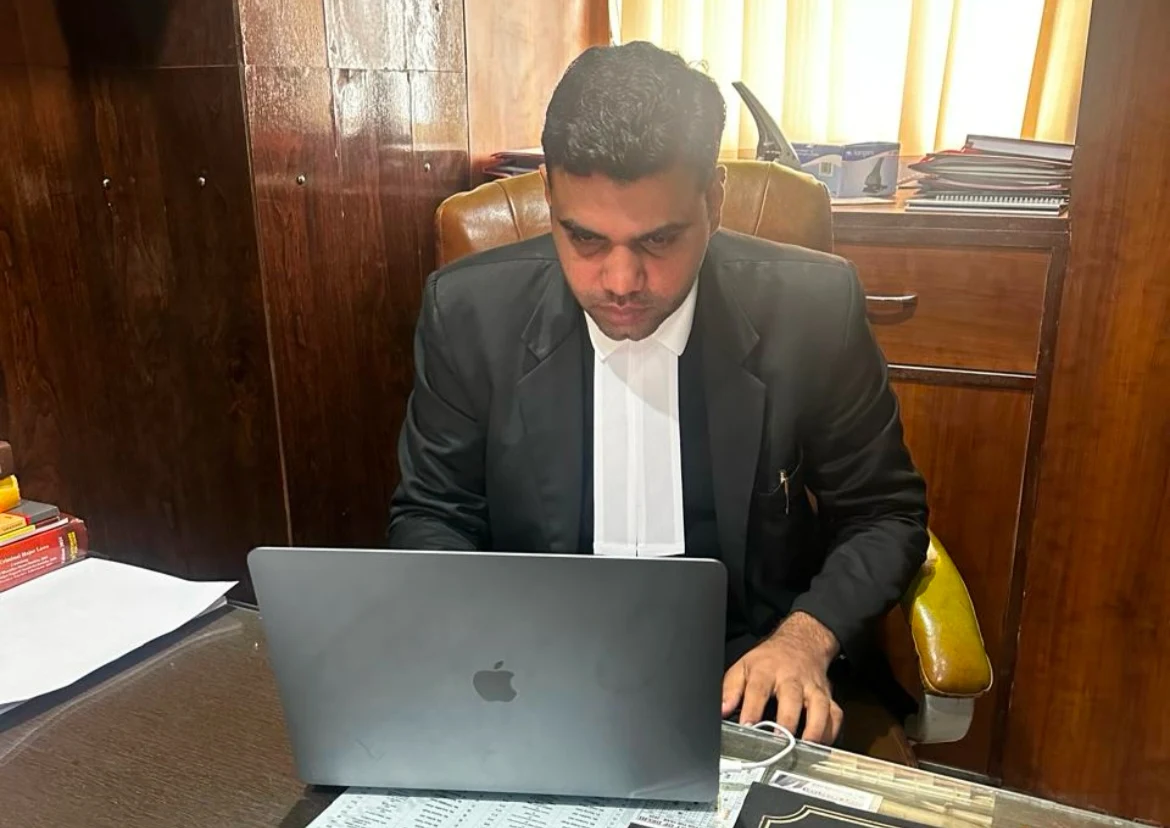
AdvocateAdvocate Surender Kumar works on family and criminal matters arising from matrimonial disputes, bringing thorough preparation, sharp drafting and clear courtroom advocacy to every case.
Book ConsultationM.K Associates Law Firm, led by Advocate Manish Kumar and Advocate Surender Kumar, is the best law firm in Delhi for matrimonial cases. With 35+ years of courtroom experience, we handle Criminal , child custody, alimony and settlement, NRI matters, civil and criminal cases with calm advice and complete confidentiality.


About M.K Associates Law Firm
Marriage disputes are emotional, and the law around them is technical. M.K Associates Law Firm, the best law firm in Delhi for matrimonial cases, brings 35+ years of experience across all legal services. Advocate Manish Kumar and Advocate Surender Kumar combine more than three decades in the Delhi courts with a patient, human approach, so you always understand where you stand and what comes next.
From the first meeting we listen, study your documents and explain your options plainly: whether a settlement is realistic, whether a contested case is unavoidable, and what each path means for your children, your finances and your peace of mind. Our chamber at Dwarka Court is easy to reach for clients across West and South West Delhi, and we regularly appear before the Supreme Court, the Delhi High Court and the district courts at Rohini, Patiala House, Tis Hazari, Karkardooma, Saket and Gurugram.
Our Services
Our firm has 35+ years of lawyer experience across all legal services. Whatever stage your matter is at, we can step in, protect your interests and guide you through the court process.
Defend your rights with the best criminal lawyers in Delhi
Read MoreBail is the temporary release of an accused person awaiting trial.
Read Morecriminal defense and prosecution for sexual offense and rape cases are handled by specialized criminal lawyers and law firms.
Read MoreFind Your Route
Choose your situation to see how the law works in plain language, what it requires and how long it usually takes.
When both spouses have decided to part and agree on the terms, the law offers a streamlined path under Section 13B of the Hindu Marriage Act (and Section 28 of the Special Marriage Act for civil marriages).

If your spouse refuses to cooperate, you can still seek Criminal by proving a legal ground under Section 13 of the Hindu Marriage Act. The case is decided on evidence, so preparation matters from day one.

Indian courts do not favour either parent by default. Under the Guardians and Wards Act and the Hindu Minority and Guardianship Act, the paramount consideration is what is best for the child.

Maintenance can be claimed during the case (interim) and at the end (permanent) under Sections 24 and 25 of the Hindu Marriage Act, and separately under Section 144 of the BNSS or the Domestic Violence Act.

Non-resident Indians often worry about travelling back for every hearing. Courts now allow appearance through video conferencing, and a duly executed power of attorney lets your advocate manage most steps.
Cruelty and dowry related allegations (earlier Section 498A IPC, now Sections 85 and 86 of the Bharatiya Nyaya Sanhita) are serious. Prompt, careful legal action protects your liberty and your family.
How We Work
A simple, transparent process so you always know what is happening and what comes next.
Share the basics of your situation by phone, WhatsApp or the quick form above.
We study your documents and explain your grounds, rights and options in plain language.
Together we choose between settlement and litigation and plan a realistic timeline.
We draft, file and appear in court, and update you after every hearing.
We work towards a final decree or settlement that protects your future and your children.
Meet Our Advocates
Two experienced advocates, one team, and a direct line to the person handling your case.
Advocate Surender Kumar works on family and criminal matters arising from matrimonial disputes, bringing thorough preparation, sharp drafting and clear courtroom advocacy to every case.
Book Consultation
With over 35 years of practice at Dwarka Court and other Delhi courts, Advocate Manish Kumar is known for his command of matrimonial law and his calm, approachable manner. He leads the firm's Criminal , custody and maintenance matters.
Book ConsultationCourts We Serve
Our chamber is at Dwarka Court, and we regularly appear before these courts.
Recognition And Events



Client Reviews
"I never had such smooth experience in court related matters, though I was in Australia only most of the time still Advocate Manish Kumar handled everything very professionally."
"I realised that there are only few advocates who have deep knowledge of Criminal cases and Mr. Manish is one of those lawyers in Dwarka, Delhi NCR."
"He is one of the few lawyers who is dedicated, loyal and trustworthy. He promptly helped me in my Criminal and custody matter. I appreciate his knowledge in law."
"He is having best team for lawyers to deal with matrimonial cases. With the help of sir I and family members got out from legal proceedings of various matrimonial cases."
"He was really good and listened to his clients in detail. He was very prompt about replying to the follow-up queries I sent him over email and chat. I recommend his services very highly!"
"Advocate Manish Kumar is really a good Criminal lawyer in Dwarka, Delhi. With his help I resolved a dispute in my family regarding separation and alimony in a timely manner."
Frequently Asked Questions
General information to help you get started. Every case is different, so speak to us for advice on yours.
Ask Our AdvocateUnder Section 13B of the Hindu Marriage Act, spouses must have lived separately for at least one year and agree to Criminal . After the first motion, the law provides a six month waiting period before the second motion, though the court can waive it in suitable cases. In practice, many mutual consent Criminal s conclude in about six to twelve months, depending on the court and how complete the paperwork is.
Section 14 of the Hindu Marriage Act generally bars a Criminal petition within one year of marriage. The court may allow it earlier only in cases of exceptional hardship or exceptional depravity, so you should get legal advice on your specific facts first.
Section 13 of the Hindu Marriage Act lists grounds such as cruelty, desertion for at least two years, adultery, conversion to another religion, unsoundness of mind, and certain communicable diseases. The petitioner must prove the ground with evidence, which is why careful preparation matters.
Yes. If your spouse refuses mutual consent, you can file a contested petition and prove one of the legal grounds. The court decides on evidence, although settlement and mediation remain possible at every stage.
Indian courts decide custody on the welfare of the child, not on the rights of either parent. Young children, especially below five years, are ordinarily kept with the mother, but fathers can seek custody or visitation, and the court considers the child's age, stability, education and wishes where appropriate.
There is no fixed formula. Courts consider both spouses' income and assets, the standard of living during marriage, the needs of children, age, health and other obligations. Maintenance can be claimed during the case (interim) and at its end (permanent) under Sections 24 and 25 of the Hindu Marriage Act, and also under Section 144 of the Bharatiya Nagarik Suraksha Sanhita (earlier Section 125 CrPC).
Under Indian personal law there is no automatic share in a spouse's self-acquired property on Criminal . The court instead decides maintenance or alimony, and the wife is entitled to the return of her stridhan. Property can also be addressed through a negotiated settlement.
In many cases, yes. Courts increasingly allow appearance through video conferencing, and a duly executed power of attorney can let your advocate act on your behalf for most procedural steps. Some stages, such as recording of evidence or the final mutual consent motion, may need your presence or a remote hearing, which we arrange case by case.
Offences earlier under Section 498A IPC now fall under Sections 85 and 86 of the Bharatiya Nyaya Sanhita. The Supreme Court has repeatedly cautioned against automatic arrests in such cases. You should contact an advocate immediately to consider anticipatory bail, cooperation with the investigation, and, where appropriate, a petition to quash or contest the case.
Hindus, Sikhs, Jains and Buddhists are governed by the Hindu Marriage Act. Christians are governed by the Indian Criminal Act, 1869, Parsis by the Parsi Marriage and Criminal Act, 1936, and Muslims by the Dissolution of Muslim Marriages Act, 1939 and related laws. Inter-faith and civil marriages fall under the Special Marriage Act, 1954.
The law allows parties to appear in person, but matrimonial cases involve strict procedure, drafting, evidence and negotiation of money and custody. An experienced advocate helps you avoid costly mistakes and protects your interests at every stage.
Bring your marriage certificate and photographs, identity and address proofs of both spouses, details of children, income and property documents, any previous notices, FIRs or court orders, and relevant messages or emails. Do not worry if something is missing; we will tell you what is needed for your case.
Visit Or Contact Us
Best Law Firm In Delhi For Matrimonial Case.
Take The First Step
You do not have to face this alone. Call or message us for a confidential discussion about your situation and your options.
Leave your details and we will get back to you.